How to teach a Young Women’s Lesson
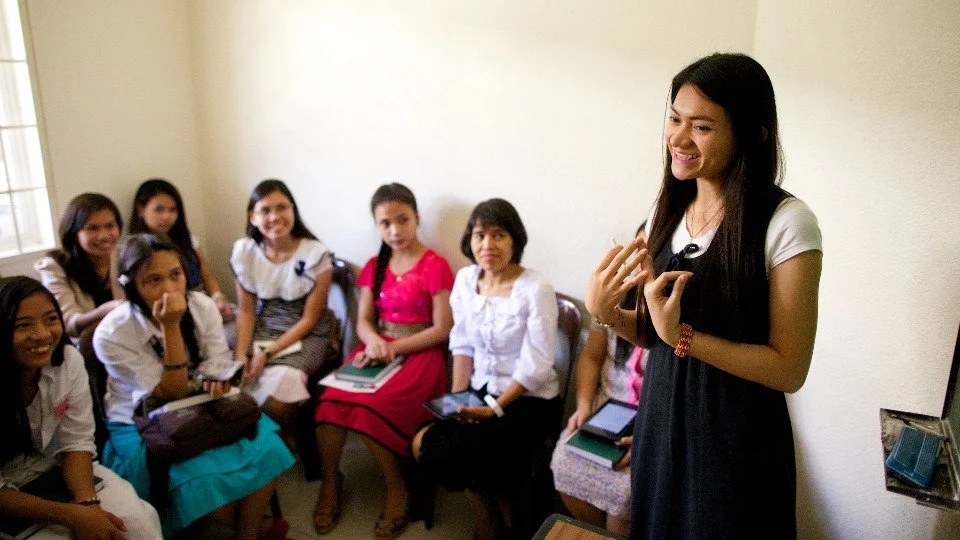
One thing I felt inspired to teach my young women is actually HOW to teach a young women's lesson. I wanted to go VERY basic because I felt like that is what my young women needed. Here is what I shared with them.
Why do youth teach?
-The person who learns the most is actually the teacher
-Think about it. You have spent the most time reading over the material and learning the lesson, you learn a lot more than a person that is just sitting there listening.
-Teaching gives you a chance to feel the spirit. Did you know that Jesus cares a lot about what is taught in our class? Because of that, He will give you inspiration about what you should say and teach in class. That is a very cool opportunity to receive revelation and help others come unto Christ.
-Teaching gives you a chance to testify of Jesus Christ and deepen your testimony. Teaching a lesson brings you closer to Jesus Christ just like a prayer or reading your scriptures or being kind to someone does
-Teaching helps you be empathetic to others. Once you’ve taught, you see how important participation is, you see how much you care about people being reverent during the lesson, you are more willing to help others when they teach because you have felt what it feels like to be a teacher.
-Youth listen more when their peers are teaching them. Youth participate more when youth are teaching. Your friendships grow and you are better able to share spiritual things with each other and be a support of each other when you accept the opportunity to teach young womens.
Why you shouldn’t be scared
-Most people don’t like teaching, even adults. You can take comfort in knowing this is something that is difficult for most people, not just you.
-The very hardest lesson you will ever teach is the first lesson you ever teach. Once you’ve taught once, it will be so much easier! You will realize it wasn’t as scary or as hard as you thought.
-Our young women’s classes aren’t that big. We all love you here and nobody is judging you. We are all trying to learn and we mess up. It’s ok!
Planning your lesson
-Start with a prayer
-Read through the whole lesson and notice what things stick out to you
-Watch all the videos and see if you want to watch any of them in class. There are a lot of great videos! If you let me know I can bring my laptop to watch it on a bigger screen but phones are ok too
-Think about how to make the lesson relatable to what is happening in your everyday life. The point of the lesson is not to TEACH new information, but help you in your life! So you are not looking for simple yes/no questions or just questions about facts, you want questions that are going to make people think about how they can do things differently in their lives.
-When you are planning a lesson, think about where you can ask people to share personal experiences about things that relate to the topic
-THE SPIRIT IS THE TEACHER. Great news, you don’t have to teach anyone anything! The Holy Ghost is actually the one who teaches everything. That’s why you can go to a “bad” lesson or someone can teach who doesn’t know anything about teaching and you can learn a lot! You don’t have to be good at it, just humble enough to realize that you are not teaching, it’s the spirit.
-The biggest and most important part of your lesson is Jesus Christ. Make sure you always talk about Jesus Christ. If it’s a lesson on being kind or tithing or rules or anything else, make sure the focus always connects back to the WHY. Why do we do this, what does this have to do with Jesus Christ. The why is Jesus Christ.
-Speak from the heart and share your testimony and you will have a successful lesson!
Getting participation
-The goal is 100% youth participation, meaning youth are teaching and youth are doing all of the answering. As adults we are happy to answer questions and teach, but you will like church more if you participate. You will learn more if you participate. Your testimony will grow stronger if you participate.
-Good questions are the most important part of your lesson.
-Wait for 60 seconds after you ask a question. During the 60 seconds, repeat the question while people try to think of an answer.
-If nobody says anything after 60 seconds, have your OWN answer prepared and answer your own question. Sometimes people just need something to get them started, then they can think of things that relate to the question.
-After the initial round of people answering the question, ask one more time: “Does anybody else have anything to add?” You will be surprised that sometimes people are waiting for you to ask that!
-If you are in a lesson as a student, try to give everyone a chance to participate. If you have an answer for every question, wait for 60 seconds before you answer to give others a chance to speak. If people know that you will always answer every question, it discourages them from participating. Unless you are in a very small class, a good rule of thumb is about 3 comments a lesson, or if nobody is talking to make sure somebody else is always offering a comment in between when you give comments. People learn through making comments, so when you answer all the questions it takes away the opportunity for others to learn.
-You can ask somebody what they think. Not everybody will have something to say about every answer, and some people struggle thinking of things on the spot, but it’s ok to ask somebody what they think.
-You can text a friend ahead of time and ask them to think of a story that might relate to a part of the lesson you are teaching, or text them a question ahead of time
Structuring your lesson
-Read through the whole lesson. Sometimes they have ideas for object lessons in there or ideas for teaching younger people. Look in the section about teaching Primary and see if you can adapt it to teaching the youth
-You could start your lesson with an outline. “We’re going to talk about this, and then we’ll talk about this, and then at the end we'll talk about this.” It helps people be prepared for what you are going to talk about, gets them thinking about the thing before you get there.
-Tell people before the activity the question you want them to answer. If you’re watching a movie, reading some scriptures, or reading a story and plan to ask a question after it’s over, tell them ahead of time so they know what to look for
-Stories are awesome. If you have a personal story, even better but sometimes if you look in the talks they suggest you can find another story that might relate to the lesson
-You can think of a game like hangman to guess a phrase or like Grace did come up with a “Recipe”
-You can put people in small groups to discuss different parts of the lesson and then have them present. In this way, other people are teaching the lesson for you, and it gives people a chance to think about things more. Seri has done this and it worked out well.
-You can have a section where people write out their answers or think about questions that require more thought, or write down a list of things they personally can do or make goals
-Visual aids, handouts, little reminders, all of that is fun and adds to the lesson
Everything else
-If you run out of time to prepare or were hoping to do a fun game and just couldn’t think of anything, don’t worry! When you read the lesson, it has questions right in there for you to ask. It has scriptures we can read and talks we can look at. Pray and ask for help. Young womens is easy going! We are all learning together and that’s ok too. Ideally you prepare ahead of time, but even if you can’t you are still going to get a lot from teaching the lesson and grow your testimony, and help all of the rest of us come closer to Christ.
-You are always welcome to bring treats to class or offer treats to encourage people to participate